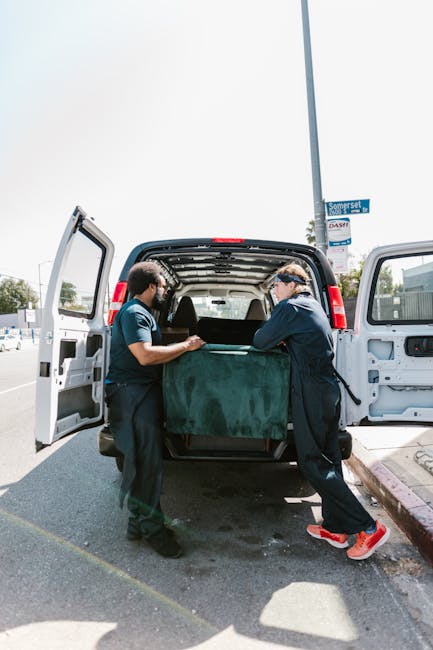
Man and van parking tips near Lamorbey Crescent for movers

If you are planning a move and want simple, realistic Man and van parking tips near Lamorbey Crescent for movers, you are in the right place. Parking sounds like a small detail right up until the van cannot stop where you need it, the sofa blocks the hallway, or everyone is doing that awkward shuffle in the road while the clock keeps ticking. Truth be told, that is where a good move can turn messy.
This guide is for anyone moving near Lamorbey Crescent who wants to avoid delays, keep neighbours onside, and make loading as smooth as possible. We will look at where parking planning fits into the move, how to think about access, which mistakes cause the biggest headaches, and how to prepare like a pro without overcomplicating things. A few calm decisions in advance can save a surprising amount of stress on the day.
Expert summary: the best parking plan is usually the one that is simple, legal, and realistic for the size of the vehicle, the time of day, and the actual street conditions. Around Lamorbey Crescent, that means thinking about turning space, kerb access, suspension rules, and whether your mover needs a short walk from the van to the door. Not glamorous. Very useful.
Why Man and van parking tips near Lamorbey Crescent for movers Matters
Parking is not just a convenience issue. For a man and van move, it shapes almost everything: how quickly items can be carried, whether fragile pieces stay safe, how many trips are needed, and how long the job takes. If the vehicle is parked badly, even a small move can start to feel like a long one.
Near Lamorbey Crescent, that matters because residential streets often have a mix of parked cars, tighter access, and the usual moving-day friction: bins out, delivery drivers, school traffic, and neighbours who may not realise a move is underway. One van can fit in a space on paper, but that does not always mean it is practical in real life. Can the driver open both rear doors? Can a trolley be used safely? Is there room to load without blocking a driveway? These are the questions that save time.
It also matters for goodwill. Nobody enjoys creating tension with neighbours by blocking gates, double-parking without thought, or leaving boxes on the pavement while someone waits. A considerate parking plan helps the move feel organised rather than improvised. And let's face it, a calm start tends to set the tone for the whole day.
If you are comparing services, it can help to review the wider support options on man and van moves or broader removal services so you can match the vehicle and crew size to the street conditions, not just the volume of items.
How Man and van parking tips near Lamorbey Crescent for movers Works
Good parking planning starts before the van arrives. The basic idea is simple: choose the safest, shortest, and most practical stopping point between the property and the vehicle. That might be outside the house, across the road with a clear crossing point, or slightly further away if kerb space is tight. The goal is not perfection. It is usable access.
In practice, the driver usually looks at four things:
- Vehicle size: a compact van behaves differently from a long wheelbase van.
- Street layout: bends, narrow sections, parked cars, and turning space all matter.
- Loading distance: even 15 to 20 metres extra can change the pace of the job.
- Stopping restrictions: yellow lines, bays, suspensions, and permit-only areas may affect where the van can wait.
When all four line up, loading tends to be smooth. When they do not, the move can still work, but it needs more patience and better coordination. A move on a quiet Tuesday morning is a different beast from one on a busy weekend, and the parking plan should reflect that.
For moves that include furniture dismantling, wrapping, or stair-heavy access, parking becomes even more important because the crew may need repeated passes between the property and the van. If you are arranging extra support, services like furniture pick-up or packing and unpacking services can reduce the number of awkward carry-backs, which is often where small delays quietly pile up.
Key Benefits and Practical Advantages
Getting parking right is one of those unexciting decisions that pays off in several ways. The benefits are not abstract; you will notice them on the day.
- Less carrying distance: fewer steps means less fatigue and lower damage risk.
- Faster loading: items move straight from door to vehicle with fewer pauses.
- Better safety: less time spent carrying bulky items across traffic or over kerbs.
- Lower stress: everyone knows where to stand, where to load, and where not to park.
- More predictable timing: easier access means the schedule stays realistic.
- Cleaner communication: a clear plan makes it easier to brief movers, neighbours, and household members.
There is also a subtle but real financial benefit. If parking is efficient, the crew spends less time on avoidable logistics and more time actually moving your belongings. That can be especially helpful for quoted jobs with a time-based element. It is not about rushing. It is about removing friction.
Practical takeaway: good parking is not a luxury detail. It is part of the moving system. If you treat it that way, everything else tends to run better.
Who This Is For and When It Makes Sense
These parking tips are useful for a broad range of movers, but they are especially helpful if any of the following apply:
- You are moving from or to a house with limited frontage.
- You live on a street where cars are usually parked tightly on both sides.
- You have heavy furniture, appliances, or awkward items to load.
- You are working to a narrow time window.
- You are moving with children, pets, or elderly relatives in the property.
- You are arranging a man and van rather than a full removal lorry and need the crew close to the door.
This guidance also makes sense if you are booking a move that includes a mix of home and business items. For example, a small office relocation or a flat move can both benefit from the same kind of parking foresight. If you need something more tailored, the wider service pages for home moves and office relocation services can help you judge the right approach for your day.
And if you are the sort of person who likes to avoid surprises altogether, you are probably already the sort of customer who benefits most from a parking plan. That sounds obvious, but it really is true.
Step-by-Step Guidance
Here is a straightforward way to plan parking for a move near Lamorbey Crescent without overthinking it.
1. Check the street first
Before moving day, look at the road in person if you can. Notice where cars usually sit, whether there is enough room for a van to stop safely, and whether any sections are too tight for manoeuvring. If you cannot visit, use a video call, photos, or a walkthrough sent to the mover. A few images can reveal more than a long phone explanation.
2. Work out the best loading side
Think about whether the property entrance, driveway, or front path gives the easiest route. The ideal position is often the one that avoids carrying large items around corners. If the front access is cramped, the rear door or side gate may be more useful, provided it is safe and practical to use.
3. Check for restrictions
Look for signs, resident permit bays, yellow lines, school zigzags, dropped kerbs, or suspended bays. If something looks unclear, do not assume it is fine. On a moving day, assumptions have a habit of becoming expensive mistakes. A quick review of the street furniture is boring, yes, but useful.
4. Reserve space the right way if needed
If you need to protect a loading spot, follow the proper local process rather than trying to improvise with cones or bins. Informal blocking of the road is a poor idea and can create complaints, delays, or worse. Many movers simply choose a quieter arrival window and a sensible fallback space instead.
5. Tell the mover exactly what to expect
Give the driver or removal team the honest version: "There may be room outside," or "It is tight, but a short wait on the corner should work," rather than saying everything is easy when it is not. Better to be a little cautious and accurate. The crew can plan for a difficult stop; they cannot plan for surprise optimism.
6. Clear the route from door to van
Move bins, bikes, planters, loose mats, and anything else that can snag a hand trolley or catch on a box corner. You would be amazed how often a move slows down because of something small and ordinary. A clear route is one of the simplest wins available.
7. Have a fallback plan
If your first-choice spot is occupied, decide in advance what the next best option is. Maybe it is a bay further up the road, maybe a space on a quieter side street, or maybe a temporary stop while one person keeps an eye on the van. It does not have to be perfect, just workable.
8. Keep the load sequence sensible
Put the largest and heaviest items nearest the van doors and leave fragile or high-use items until there is a clear path. If you have a piano, antique cabinet, or especially awkward item, that should be planned before anyone starts lifting. Special items deserve special care, no heroics.
Expert Tips for Better Results
Most good moving days are won in the details. A few extra decisions, made calmly, can improve the whole job.
Tip 1: Arrive a little earlier than the main lifting window. Ten minutes can be enough to inspect the stop, adjust the van position, and avoid circling the street while everyone else waits. Early is not always necessary, but it is often helpful.
Tip 2: Use the closest legal position, not just the closest possible one. That distinction matters. A space that looks handy but creates a hazard is rarely worth it. Safety and legality should stay in the lead, even when the clock feels annoying.
Tip 3: Keep one person outside to guide the route. On narrow streets, a spotter can help the driver reverse, steer around parked cars, and avoid blocking a driveway. It is a small role that carries real value.
Tip 4: Think about weather. Rain changes everything. Wet boxes are slippery, pavements are trickier, and doors tend to stay open just long enough to let in a gust of cold air. On a damp morning, a few extra metres of carrying can feel like twice that. British weather doing what it does best.
Tip 5: Protect neighbours as well as your belongings. Keep shared entrances clear, avoid idling unnecessarily, and make sure the crew is not leaving wrapping or tape in the road. Good manners really do help the day flow.
Tip 6: Match the van to the job. A larger vehicle is not automatically better if the street cannot handle it. A more compact moving van or a well-sized removal van may be far more practical on a tight road than a vehicle that looks impressive but parks badly.
Tip 7: Keep the first load simple. Start with furniture or boxes that are easy to access from the door. A sensible first wave sets the tempo. Once the rhythm is there, the rest of the move tends to feel less chaotic.
Common Mistakes to Avoid
Some mistakes are very common, and most of them are avoidable if you plan even a little.
- Leaving parking until the van arrives: by then, your options are already limited.
- Assuming a space will still be free: it often will not, especially on busier residential roads.
- Blocking driveways or dropped kerbs: this causes frustration and can also trigger complaints.
- Not telling the mover about tight access: the crew needs the truth, not a guess.
- Ignoring loading distance: a "short walk" can become a very long one with a wardrobe in hand.
- Forgetting about reverse space: vans need room to reposition safely.
- Using the wrong vehicle size: too big can be just as awkward as too small.
- Rushing the loading point: a hurried setup often leads to dropped items, strained backs, or stress.
One of the easiest mistakes to make is believing that parking is a minor issue that can be solved on the fly. Sometimes it can. Often it cannot. A little pre-move thought usually saves a lot of on-the-day improvisation.
Tools, Resources and Recommendations
You do not need a long list of gadgets to handle parking well. In most cases, the useful tools are simple, practical, and already nearby.
- Phone photos or video: perfect for showing the mover the street layout and access points.
- Measuring tape: useful if you are checking whether large furniture will pass through a route safely.
- Basic floor plan or room list: helps the team know what is going out first.
- Protective covers and blankets: reduce risk when short carries are needed.
- Labels and colour markers: help avoid confusion when loading from a tight space.
- Conversations with the mover: still one of the best tools available, to be fair.
For wider moving preparation, a few website resources may also help you think beyond parking. If you are still trimming what you own before moving day, pre-move decluttering can make the load easier to handle. If you are trying to keep breakables safe, packing strategies can reduce delays and make loading much tidier.
And if you want to understand what to expect from the wider moving process, the company's pricing and quotes information and insurance and safety pages are useful reading before you commit.
Law, Compliance, Standards, or Best Practice
Parking around a move should follow local road rules and common-sense best practice. That sounds obvious, but it is where many problems begin. If a bay is restricted, if yellow lines apply, or if a suspension notice is in place, do not treat the area as available just because it looks convenient.
In London, moving-day parking can also involve permits, loading rules, and local enforcement considerations. Exact arrangements depend on the street and the local authority, so it is wise to check the current position before the day rather than relying on old information or neighbour advice. Old advice is often well-meant and occasionally wrong. Very human, that.
Best practice usually includes the following:
- Park only where the vehicle can stop safely and legally.
- Keep access to driveways, pavements, and crossings clear.
- Avoid obstructing emergency access or shared entrances.
- Use a spotter when reversing in tight streets.
- Plan for pedestrians, cyclists, and children in the area.
- Follow any site-specific rules if the property is part of a managed block or estate.
If you are uncertain about access on a particular street, ask the mover to assess it in advance. A reputable team will usually prefer a clear, honest description to a last-minute scramble. For added reassurance, policies such as health and safety guidance, terms and conditions, and complaints procedure can show you how the company expects jobs to be handled if something does not go to plan.
Options, Methods, or Comparison Table
Different parking approaches suit different moves. Here is a simple comparison that may help you decide what fits your street and load.
| Parking approach | Best for | Pros | Watch-outs |
|---|---|---|---|
| Outside the property | Short carries, lighter loads, clear frontage | Fastest loading, easiest coordination | May not be available on busy roads |
| Short distance nearby | Busy residential streets, permit areas, shared spaces | Often realistic and legal, still manageable | Extra carrying time, more foot traffic |
| Pre-arranged loading spot | Moves with known access limits | More certainty and fewer surprises | May require advance planning and flexibility |
| Smaller vehicle strategy | Narrow roads or tight turns | Easier to position and park safely | May require more careful loading |
The right option usually depends on street width, the number of items, and how quickly the van can get in and out without causing issues. Bigger is not always better. Sometimes the smarter move is simply the smaller, easier one.
Case Study or Real-World Example
Here is a realistic example. A couple moving from a first-floor flat near Lamorbey Crescent had a bed, a sofa, two wardrobes, and about twenty medium boxes. On paper, it looked straightforward. In practice, the street was lined with parked cars and the nearest open space was not directly outside the building.
Instead of waiting until the van arrived to decide, they sent the mover photos of the road and the building entrance the day before. The crew selected a van that could stop safely a little further along, with enough space for rear access and a short trolley run. The couple cleared the front path, moved a bicycle and a recycling bin, and kept one person outside to guide the load.
The result was not dramatic. Which is kind of the point. No drama, no last-minute arguments about where the van could stop, and no unnecessary carrying around corners. The move still took effort, of course. Moving always does. But the parking side of it was orderly, and that kept the day calm.
That is what good parking planning looks like in real life: not flashy, just quietly effective.
Practical Checklist
Use this checklist the day before and again on the morning of the move.
- Confirm the vehicle size and access needs with the mover.
- Check whether the road has restrictions, yellow lines, or bay rules.
- Look for any planned suspension, works, or temporary obstructions.
- Clear bins, bikes, and loose items from the loading path.
- Decide on a primary stop and a fallback stop.
- Share street photos or a short video with the mover if access is tight.
- Keep the route from property to van free from trip hazards.
- Prepare any heavy or awkward items first.
- Make sure someone is available to answer calls when the crew arrives.
- Have water, keys, and essentials to hand so nobody has to rummage at the last minute.
Quick reminder: if the parking situation looks uncertain, do not wait until the van is idling in the road to sort it out. A five-minute conversation earlier can save a twenty-minute headache later.
Conclusion
Parking may not be the most exciting part of a move near Lamorbey Crescent, but it is one of the parts you can control. When you choose a sensible stopping point, check restrictions, share accurate access information, and keep the loading route clear, the rest of the day becomes much easier to manage.
That is really the heart of Man and van parking tips near Lamorbey Crescent for movers: make the practical bits easy before the boxes start moving. It keeps the crew efficient, protects your belongings, and reduces the little bursts of stress that can otherwise take over a moving day. A tidy plan, a realistic stop, and a bit of neighbourly care go a long way.
If you want support that feels organised from the outset, take a moment to review service details, safety information, and quote options before moving day arrives. Get a free quote today and see how much you can save.
And if the street feels a bit tight, that is okay. Most moves are solved by preparation, not perfection.
Frequently Asked Questions
Can a man and van park directly outside my house near Lamorbey Crescent?
Sometimes yes, sometimes no. It depends on the street layout, available spaces, and any parking restrictions. The safest approach is to plan for both the ideal spot and a nearby fallback option.
What if there is no space outside the property on moving day?
If that happens, use the nearest legal and safe alternative that still keeps the carry distance manageable. A short walk is usually fine if the route is clear and the van can stop without causing an obstruction.
Should I reserve parking for the van in advance?
Only if it is allowed and done properly. In some streets, advance planning is helpful; in others, a simple off-peak arrival time and a backup plan work better. Do not block the road informally.
How early should I think about parking before the move?
Ideally the day before, or even earlier if you know the street is tight. Parking is one of those details that is much easier to fix before the van arrives.
Does the size of the van matter for parking?
Very much so. A larger van needs more room to stop, turn, and load safely. If the street is narrow, a smaller or more compact vehicle can be the smarter choice.
What should I tell the mover about access?
Be specific. Mention narrow sections, parked cars, steps, shared entrances, driveways, or anything else that could affect parking or loading. Honest detail helps the crew plan properly.
Is it okay if the van has to park a short distance away?
Yes, as long as the stop is legal and safe. A short walk is often manageable, but it will slow the move a little, especially with heavy furniture or lots of boxes.
What items are hardest to move if parking is poor?
Bulky furniture, white goods, mattresses, and fragile or awkward pieces tend to suffer most when the van cannot get close. The longer the carry, the greater the strain and the risk of damage.
How can I make loading easier on a tight residential street?
Clear the route, keep doors open only when needed, have someone guide the van, and stage items near the exit if that is safe. Small efficiencies really add up.
Do I need to worry about permits or local restrictions?
Yes, you should check. Rules can vary by street and by local authority, and loading rules are not always obvious just from looking at a space. It is better to verify in advance than rely on guesswork.
What if bad weather makes parking and loading more difficult?
Then plan for extra caution and a little extra time. Wet pavements, slippery items, and limited visibility can all slow things down. A sensible buffer makes the day feel less pressured.
Can these tips help with office moves as well as house moves?
Absolutely. Office moves often have even tighter timing and more items to coordinate, so good parking and access planning can make a big difference. The same logic applies: shorten the carry, keep it safe, and reduce surprises.